The device stays.
comma four remains part of the setup. Chestnut does not replace it.
Chestnut, explained
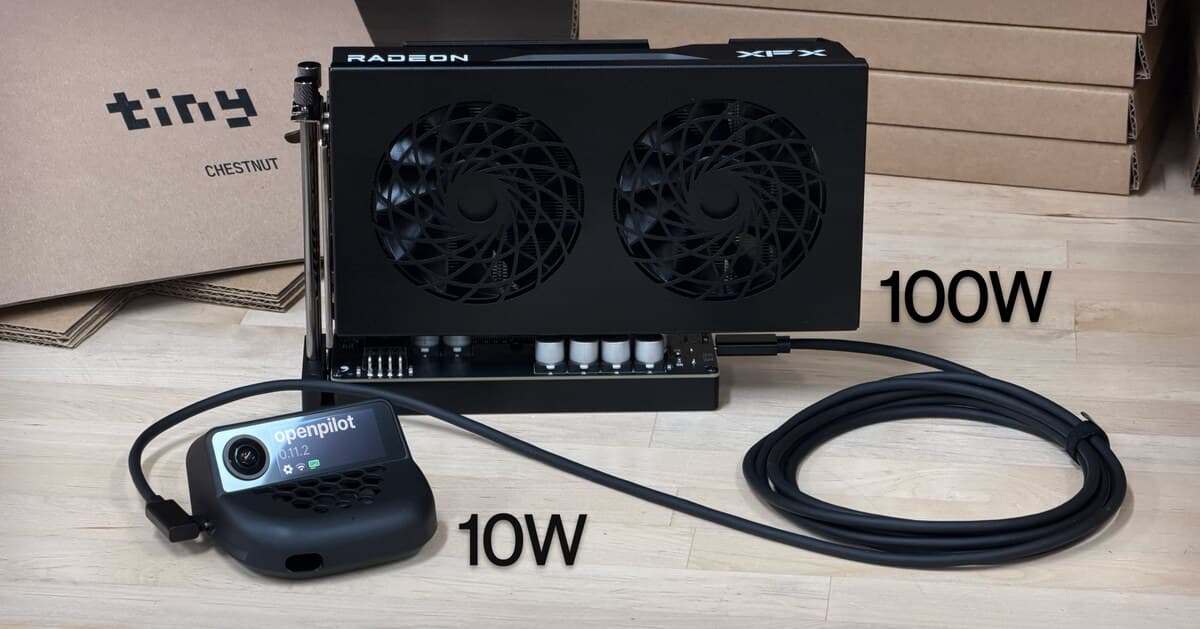
Chestnut connects an external graphics processor to comma four so openpilot can run a larger driving model.
The plain-language version
A driving model helps software interpret the road and plan driving actions. A larger model needs more computing capacity.
comma four remains part of the setup. Chestnut does not replace it.
Chestnut connects a separate graphics processor, often called a GPU, to the device.
Use the documented Chestnut software path. A standard installer is not a substitute for the Chestnut setup instructions.
What changes in your car
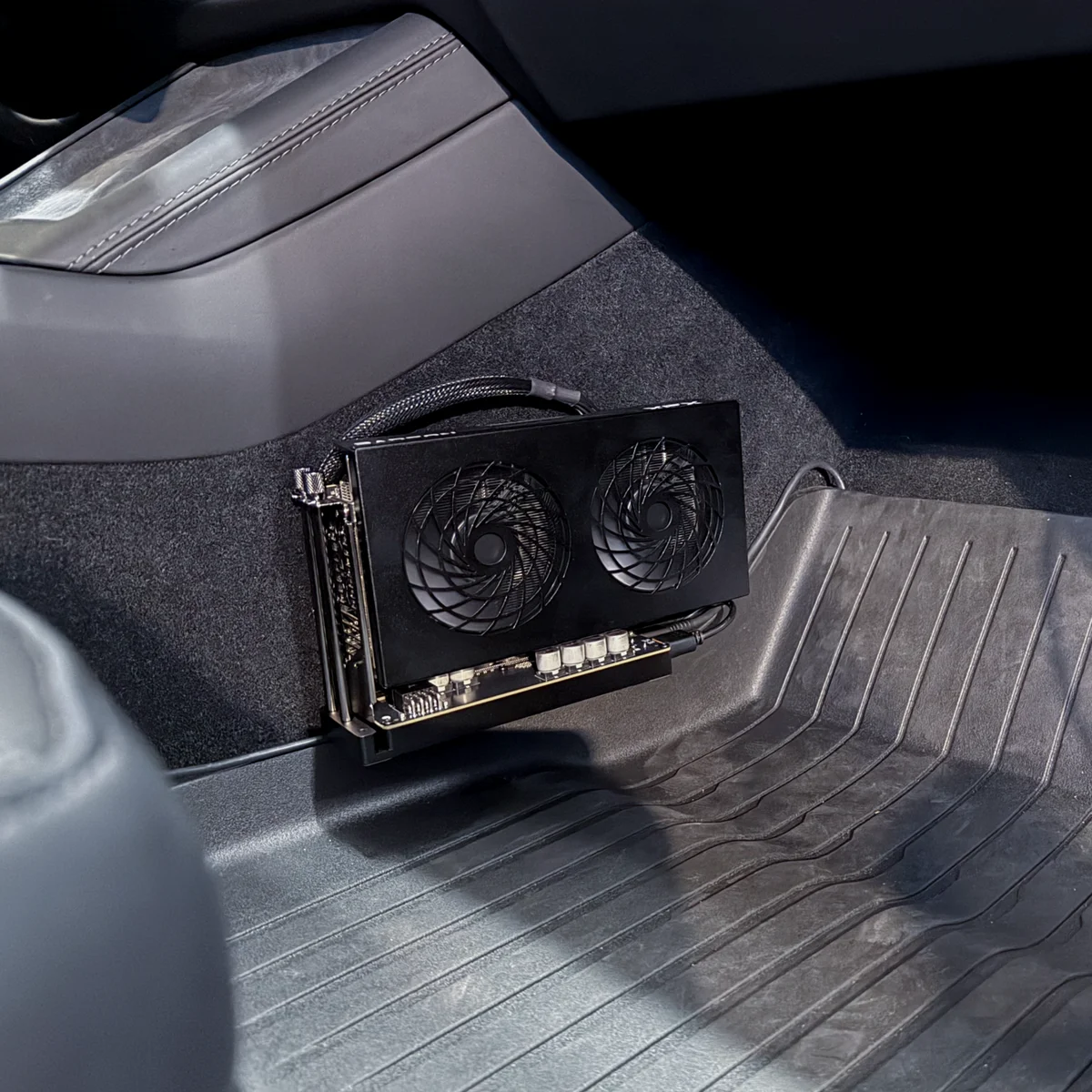
The assembled hardware needs secure mounting, power, a connection to comma four, and room for airflow.
The ready-to-drive kit and dock-only option are different products. Check the current contents before ordering.
See the installation guideChestnut does not make the car self-driving. You still need a supported car, matching software, and an attentive driver.
A larger model is not a promise of better behavior on every road. Keep the same readiness to steer and brake.
No. Standard openpilot runs on comma four without Chestnut. Choose Chestnut only if you want its larger-model setup and extra hardware.
No. comma four is the device. Chestnut is separate hardware that connects an external graphics processor to it.
Do not assume that. Car compatibility still needs a separate exact-model, year, and equipment check.
Your next step
Was this guide helpful?