What Chestnut adds
- The released 880M-parameter Chestnut-class driving model
- A much larger model-compute budget than the mobile processor provides
- A supported path for comma to test and ship larger driving models
Announcement + guideChecked September 3, 2026
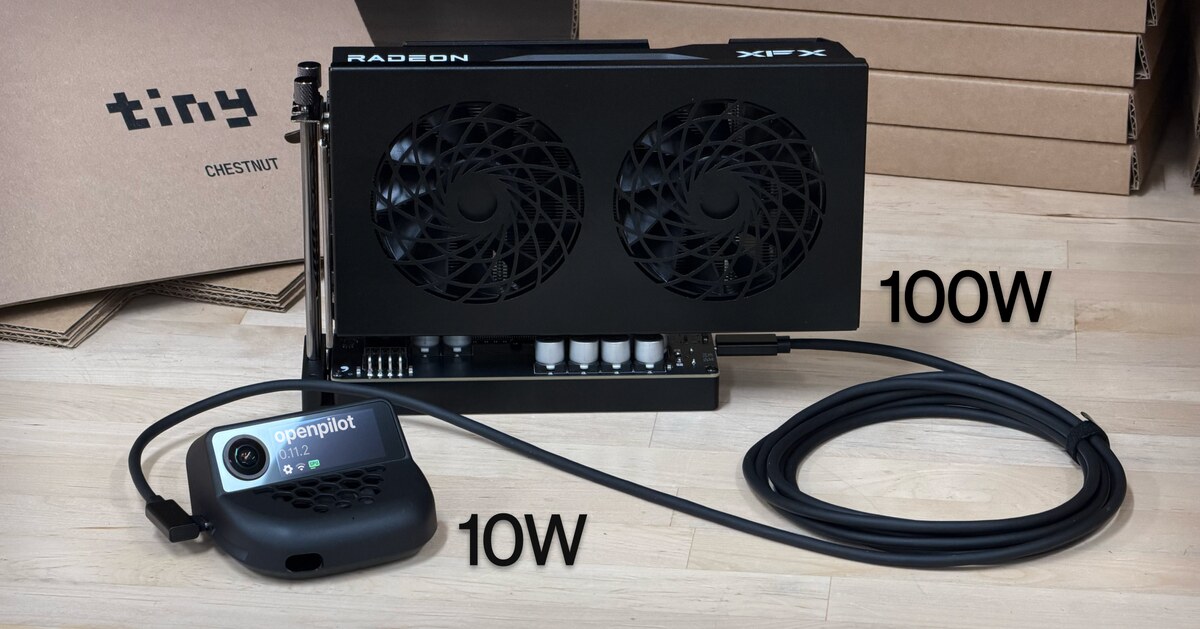
Chestnut connects an external graphics card to comma four. The ready-to-drive kit uses an AMD Radeon RX 9060 8GB to run openpilot's largest driving models.
Chestnut is optional. openpilot is still driver assistance. Supervise every drive.
The announcement
comma launched Chestnut on August 12, 2026. The ready-to-drive kit includes Chestnut, the non-XT Radeon RX 9060 8GB, a long USB cable, vehicle power, and mounting strips. comma four remains the official in-car target.
What it does
comma four handles the cameras, driver checks, and the car connection. Chestnut carries data over USB. The desktop GPU runs the large driving model. If that model cannot load or run, the reviewed openpilot code returns to the small model.
Install it
Enter this URL on comma four's Custom Software screen while the car is parked.
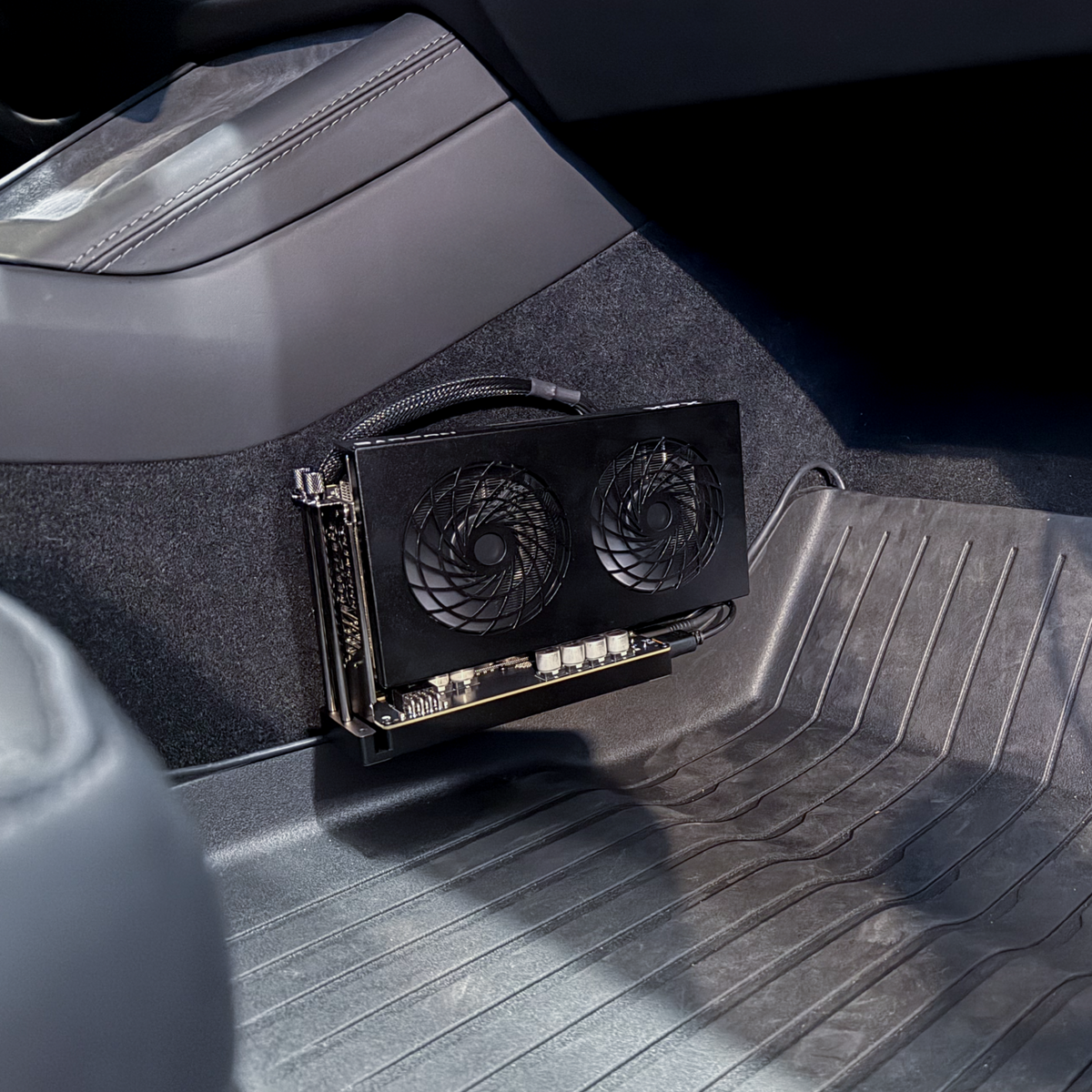
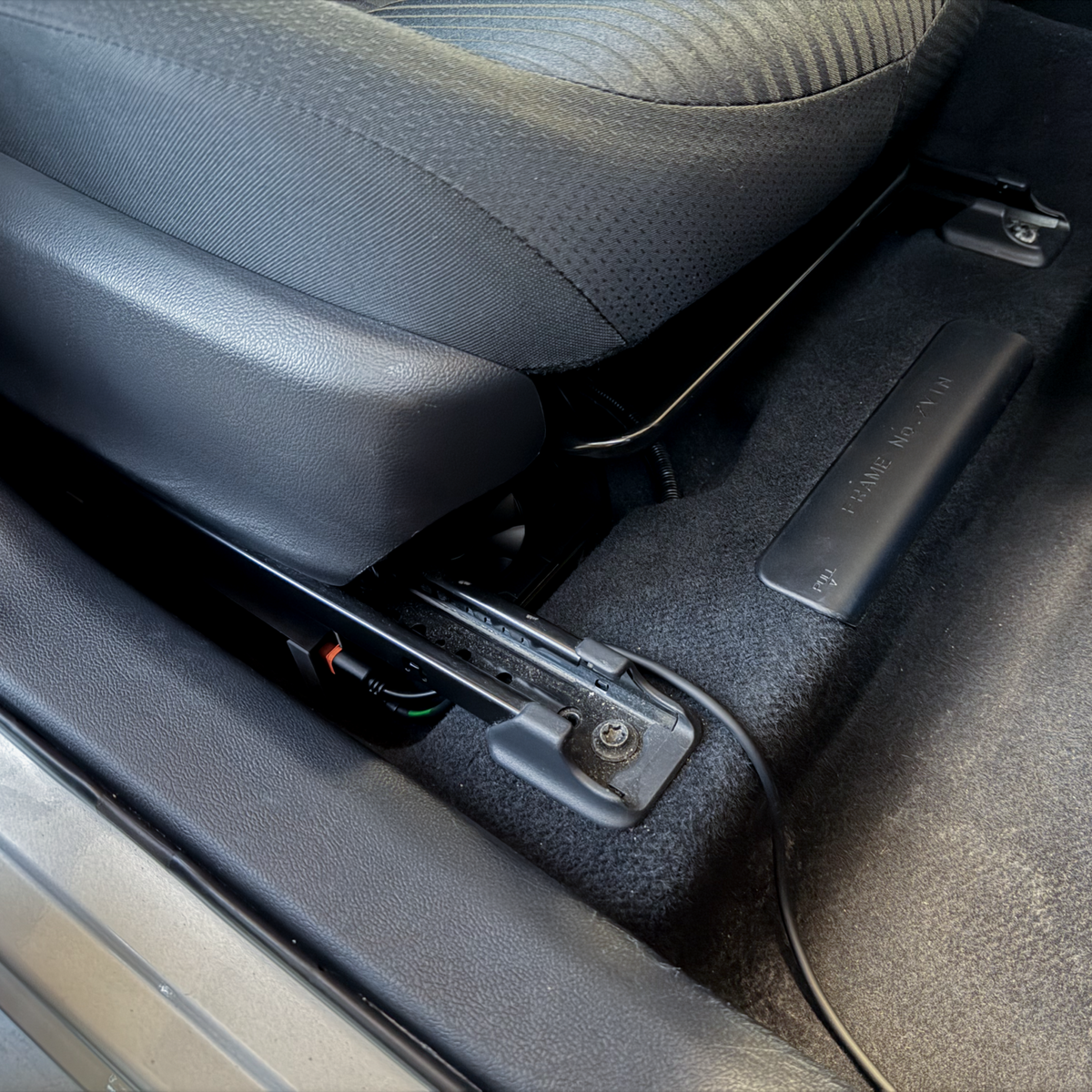
installer.comma.ai/commaai/release-chestnutOfficial in-car channel: release-chestnut. Do not paste this into a phone or desktop browser.Install the card in Chestnut. Secure the card and mount the kit in the passenger footwell or under the passenger seat.
The RX 9060 is a desktop card. Do not cover its fans or place loose items against the card.
Connect the vehicle power cable. Run the included long USB cable to comma four.
Enter the URL below on Custom Software. Remove the current software through Settings first if needed.
The hardware difference
Large vision models need compute and fast memory. The RX 9060 has about 9.6 times the Snapdragon 845's peak internal memory bandwidth. It also has dedicated graphics memory and far more GPU compute.
| Specification | comma four | Chestnut kit |
|---|---|---|
| Processor | Snapdragon 845 MAX | Radeon RX 9060, non-XT |
| Memory | LPDDR4X, shared | 8GB GDDR6, dedicated |
| Memory bus | 4 × 16-bit = 64-bit | 128-bit |
| Memory speed | Up to 1866 MHz | 18 Gbps |
| Peak bandwidth | About 29.9 GB/s | 288 GB/s |
| GPU | Adreno 630 | RDNA 4, 28 compute units |
| Peak FP32 | Not listed by Qualcomm | 21.4 TFLOPS |
| Cooling | Silent MAX cooling | Desktop card; needs open airflow |
The 288 GB/s figure is inside the graphics card. It is not the USB cable speed. Peak hardware numbers do not guarantee better driving on every road.
Sources: AMD RX 9060 specifications, Qualcomm Snapdragon 845 brief, and comma four announcement.
The model difference
About 58.7 MB is a useful weight-only estimate, not a measured file size. The released Chestnut model has 880 million parameters and comma calls it 30 times larger. That implies about 29.3 million parameters for the launch-time on-device model. At two bytes per weight, those weights alone would use about 58.7 MB. Model files and runtime memory also contain other data, so their real sizes differ.
Why bigger models
comma says it rebuilt its MLSim, data, and training stack so more driving data and training compute can produce better models. Its autonomy team now plans to focus mainly on Chestnut-class models.
More model capacity can support richer visual input and more complex behavior. Earlier openpilot work showed that wider camera input helped with sharp turns and cut-ins. However, comma has not said that a future Chestnut model will use every pixel from every camera.
Read comma's wider-view exampleWhy tinygrad matters
tinygrad is the model runtime and hardware-access layer used by openpilot. Its current documentation covers Qualcomm and AMD GPUs, including AMD access over USB. That work makes the Chestnut connection practical.
comma's MLSim and data pipeline train the driving models. tinygrad runs model work across the hardware. These parts work together, but they are not the same system.
What happens next?
comma says its autonomy team will focus primarily on Chestnut-class models. It also says this should increase development speed. The launch post says these models have room to grow, but it does not promise an 8-billion-parameter release or a date.
comma four without Chestnut and comma 3X still have their own on-device release path. Work on large models can improve data, training methods, and future model designs for everyone.
Distillation is one possible path. A smaller model learns from a larger model. comma has not promised a distilled Chestnut model for comma four or comma 3X. Buy Chestnut for the large-model experience it supports now, not for an unannounced future port.
About the Tesla comparison
comma says comma four plus Chestnut has compute similar to Tesla HW4. Tesla's public support page lists FSD (Supervised) for HW3 and HW4, with some rollouts starting on HW4. That shows why software may differ by hardware. It does not prove a comma distillation plan.
| Item | AI3 / HW3 | AI4 / HW4 |
|---|---|---|
| FSD (Supervised) | Listed as available | Listed as available |
| Rollout order | Timing can come later | Some rollouts start here |
| Memory type, bus, bandwidth | Not published by Tesla | Not published by Tesla |
We do not present teardown estimates as Tesla product specifications. Source: Tesla FSD support.
The model name
A July 1 openpilot change used the name “lebowski model.” The main branch later moved to another large-model object. “Chestnut-class model” is the clearer name for the full line. Chestnut detects the hardware; there is no separate Big Lebowski picker.
Quick answers
No. comma four runs normal openpilot on its own. Chestnut is an optional upgrade for the larger-model path.
No. comma lists the AMD Radeon RX 9060 8GB. AMD lists 28 compute units and 18 Gbps GDDR6 for this non-XT card.
No. Use the release-chestnut installer for the stable in-car path. Master is for development.
That is not the official in-car product path. comma documents and sells Chestnut for comma four.
Maybe, but comma has not promised that. Distillation can teach a smaller model from a larger one. Treat that as a possible future path, not a released plan.
Bandwidth calculations: Snapdragon, 3,732 MT/s × 64 bits ÷ 8 = 29.9 GB/s. RX 9060, 18 Gbps × 128 bits ÷ 8 = 288 GB/s. Model estimate: 880 million ÷ 30 = 29.3 million parameters. At two bytes per weight, 29.3 million × 2 = 58.7 MB.
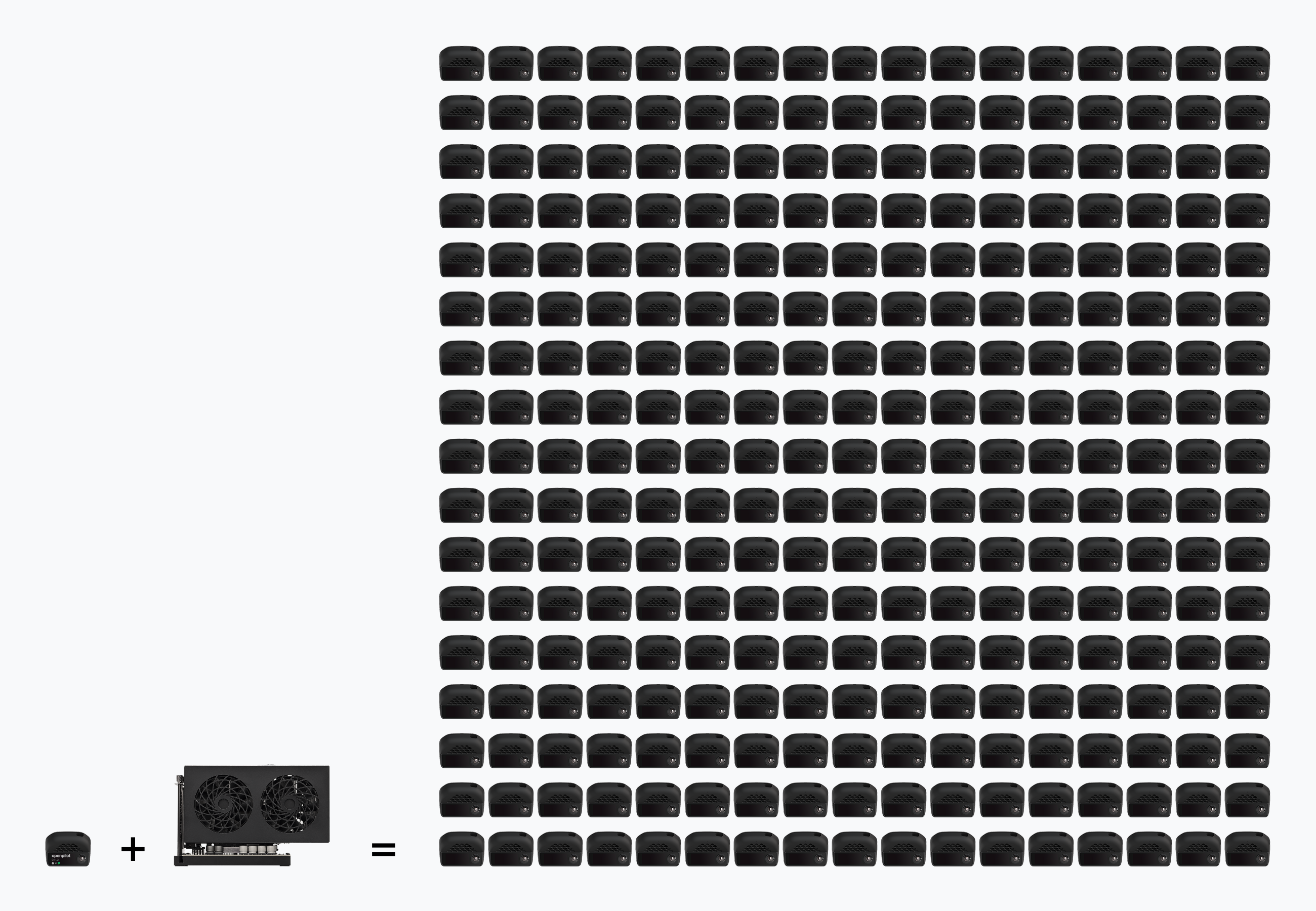
comma describes the first Chestnut-class driving model as 30 times larger by parameter count and 100 times larger by FLOPs than the latest on-device model at launch.
Photos: comma.ai. CommaGuide is an independent guide and is not affiliated with comma.ai.
Was this guide helpful?